
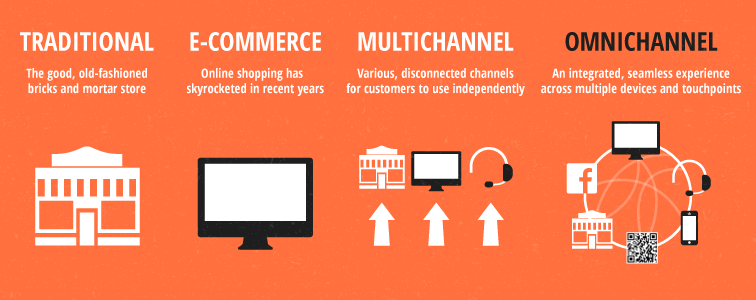
What is Omnichannel? Omnichannel retail is the seamless shopping experience that covers all the sales channels available to the customer. It ensures that the brand delivery and the functionality of the channels is consistent, effortless and complementary at all times for all the customers. The Omnichannel Customer on the other hand is someone who is researching and shopping the product range using a variety of channels (i.e. store, smartphone application, website, catalog). The image bellow depicts the evolution of retail from traditional brick and mortar model, to e-commerce, to multichannel and finally to the integrated omnichannel model.
Why does Omnichannel matter? The number one reason why retailers should strive to improve their omnichannel experience is simple – it impacts the bottom line. A customer who can shop the range of products of a particular retailer anytime anywhere is more likely to spend more, shop more frequently and adhere to a loyalty program. Today, a seamless Omnichannel experience is no longer something that sets retailers apart, it’s not perceived as an upgrade to the shopping experience, it is something customers expect. A survey centered around the concept of Omnichannel conducted in 2014 concludes that customers “expect to be treated as unique – contacted the way they want, when they want with products and services tailored to their preferences and shopping habits.” What does that mean? It means that having a poor or nonexistent Omnichannel strategy is equivalent to handing over your clients to the competition.
Let’s take a specific example. Jane is an avid shopper. Normally she will investigate a purchase on the mobile app of the Retailer X, then go to the store X (that’s located a couple miles away from her house) and look at item in person. If she likes the item she usually takes more time to think, and in a few days she’ll close the deal on the company’s website. Summing up Jane’s path we end up with three stages: (1) investigation of product range using the app (2) trial and emotional involvement with the product in the store (3) and finally, purchase of the product via retailer’s website. The purchase would not have occurred if there was a disruption and/or complication at either stage (2) or stage (3). Several things might have happened: the item being out of stock either in store or online; the loyalty points applying only toward one of the two channels; the return policy does not allow for an in-store exchange etc. Ultimately Jane might end up completing the purchase of the product with retailer Y who carries the exact same product, and on top of everything she might choose retailer Y for future purchases. In that case a deficient Omnichannel experience is causing not only the loss of the order, but also the loss of the customer.
How do we measure the performance of Omnichannel? Traditional retail metrics won’t do because they imply an isolated shopping pattern. Cross channel shopping patterns make it difficult to assign a certain share of revenue only to the channel where the purchase was executed. Measurement of net store sales, single store sales growth, sales per square foot, basket size, average retail price and labor as a percentage of sales are still important, but they do not capture the full value of brick and mortar stores. New KPIs are crucial because the interplay between sales channels is becoming more and more complex and driving a significant share of revenue. For instance physical stores are no longer perceived solely as sales channels, instead customers often visit the store to investigate the quality of the product, connect with the brand, choose the right size etc. At the end of this phase they might or might not finalize the purchase in the store, in many cases the purchase is completed online. Therefore the in-store conversion metrics could be relatively low, but the presence of the store is responsible for a significantly higher conversion online.
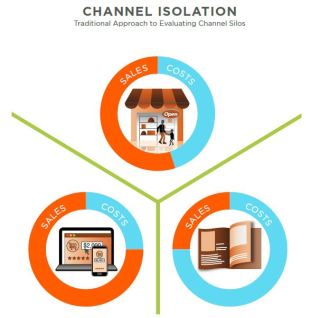
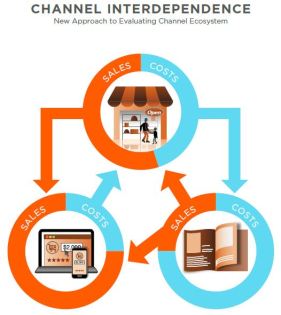
The inability to factor in the share of online revenue driven by the in store experience contributes to the ill informed decisions, such as closing physical store because the rent and payroll expenses do not justify the volume of sales. This in turn gradually erodes the brand experience and reflects poorly on the online sales. Ultimately this evil cycle that leads to lower performance across all sales channels and inadequate KPI are the ones that lay at the core. Omnichannel retail requires a new way of approaching KPIs, let’s review the main changes.
1) Rethinking the P&L
It is necessary to rise above the individual channel performance and capture the synergies of the retail infrastructure. Maintaining separate P&Ls by channel goes against the concept of omnichannel. Consumers engage and buy from a brand when and how they see fit, so they expect the brand experience to be holistic across all channels. Therefore, an internal separation of P&L by physical, Web and mobile stores is missing the point of what omnichannel stand for.
2) Measure Rewards
It is also necessary measure and reward levels that drive consumers down the path to purchase, rather than just the outputs of a transaction. It is important to go beyond tracking and rewarding only single-channel transaction metrics (such as traffic, conversion, basket size and average sales price) by also measuring all levers that move consumers down the path to purchase—awareness, engagement, trial, conversion and loyalty. For example, a more holistic set of retail metrics should include the number of product recommendations per visit and the conversion rate on these product recommendations. Not only will these new metrics allow a retailer to assign a value to all brand- building activities, they also help create incentives for the entire organization to push consumers down the path of purchase regardless of the channel.
3) Introducing New Store Engagement Metrics
Offering credit where credit is due is an important part of the equation. The role played by store associates is expanding together with the omnichannel integration. Sales associates are expected to cover a wide range of activity that include: handling in store returns of online purchases, answering awareness questions and checking size availability. In that context the sales metrics that are connecting in store sale volume to the overhead expenses are becoming irrelevant. In this circumstance the Cross-channel conversion rate, Cross-channel basket size are better indication of the overall performance. It is virtually impossible to compute these indicators without a loyalty program in place, because of the tracking challenges. Unfortunately, even with a loyalty program in place, not all the customers will become engaged. Some brands are experimenting with workarounds where stores are credited with sales occurring in the immediate vicinity of the shipping address connected to the online purchase.
Ensuring a high caliber omnichannel experience and tracking the relevant metrics requires a certain level IT readiness that we will cover in the next post dedicated to this subject.





 Retail Therapy